From PowerPoint to Collectible Toys: Resonance and the Real Value of OUTBIRD
Recently, my two main business directions have become clearer.
The first is Xiaomishu PPT. It grew out of my everyday work: translating presentations, changing their aspect ratios, adjusting layouts, and handling last-minute changes so that a deck I have already invested effort in can actually be delivered well. I began by trying to solve my own problems. Then I realized that other people might face the same ones.
The second is an overseas store, currently centered on maydayland.fans, where I am exploring the sale of collectible toys to international customers. Its starting point was not a customer need I already understood well. It was the striking differences in prices I noticed while traveling in the United States, together with a simple personal ambition: earn dollars and spend in renminbi.
One begins with a difficulty I experience myself; the other with an opportunity I noticed elsewhere. One mainly serves people in circumstances like mine; the other requires me to understand people I do not yet know well.
But as I thought further, I began to see that the central work these businesses ask of me may be the same.
Understand another person, reach and move them through some form of expression, and help something become valuable and meaningful to them, potentially leading to action.
That realization also changed what I expect of OUTBIRD, the system I am building to organize AI tools and business execution. I used to focus on how it could become more intelligent, more autonomous, and more like an organization. Now another question matters more: if the major AI companies are also getting better at understanding people and doing things, what makes OUTBIRD worth having?
1. Two businesses, the same underlying work
“Sell the right product to the right person” is one of my starting points for thinking about business.
But “right” is not simply a match between a feature and a need on paper. Something may already be in front of a person without being noticed, understood, or seen as relevant to their life.
When I make a presentation, I certainly want accurate information and clear reasoning. But, honestly, I also want the audience to think: this person is impressive; they understand the problem; what they are saying makes sense, and it is interesting. Their ideas are worth remembering, their proposal deserves support, and their judgment deserves trust.
The toy store involves a similar ambition. I am not merely displaying dimensions, materials, and prices. I hope someone sees a toy and thinks: this is delightful; it has a character I like; having it in my space would make me happy. I want it.
The desired outcomes differ, but the underlying structure is close:
Move from “I have something here” to “This matters to me, and it is worth acting on” in the other person’s mind.
During the discussion, I even used a deliberately blunt Chinese term that translates as “brainwashing.” What I was trying to identify was not deception or coercion, but a shared mechanism of influence: affecting what someone notices, how they interpret it, and what they consider worth pursuing. More precise terms would be education, reach, emotional impact, and resonance.
This is more than saying that both businesses need marketing. Making the presentation is already an attempt to influence an audience. A toy’s form, presentation, and place in everyday life also contribute to how a customer understands it. Expression is not just packaging added at the end; it is part of how the thing is encountered.
Of course, expression cannot replace delivery. An audience finding an argument convincing does not establish that its evidence is sound. A customer being moved does not guarantee satisfaction when the product arrives. Resonance is an important entry point, not a guarantee of every business outcome.
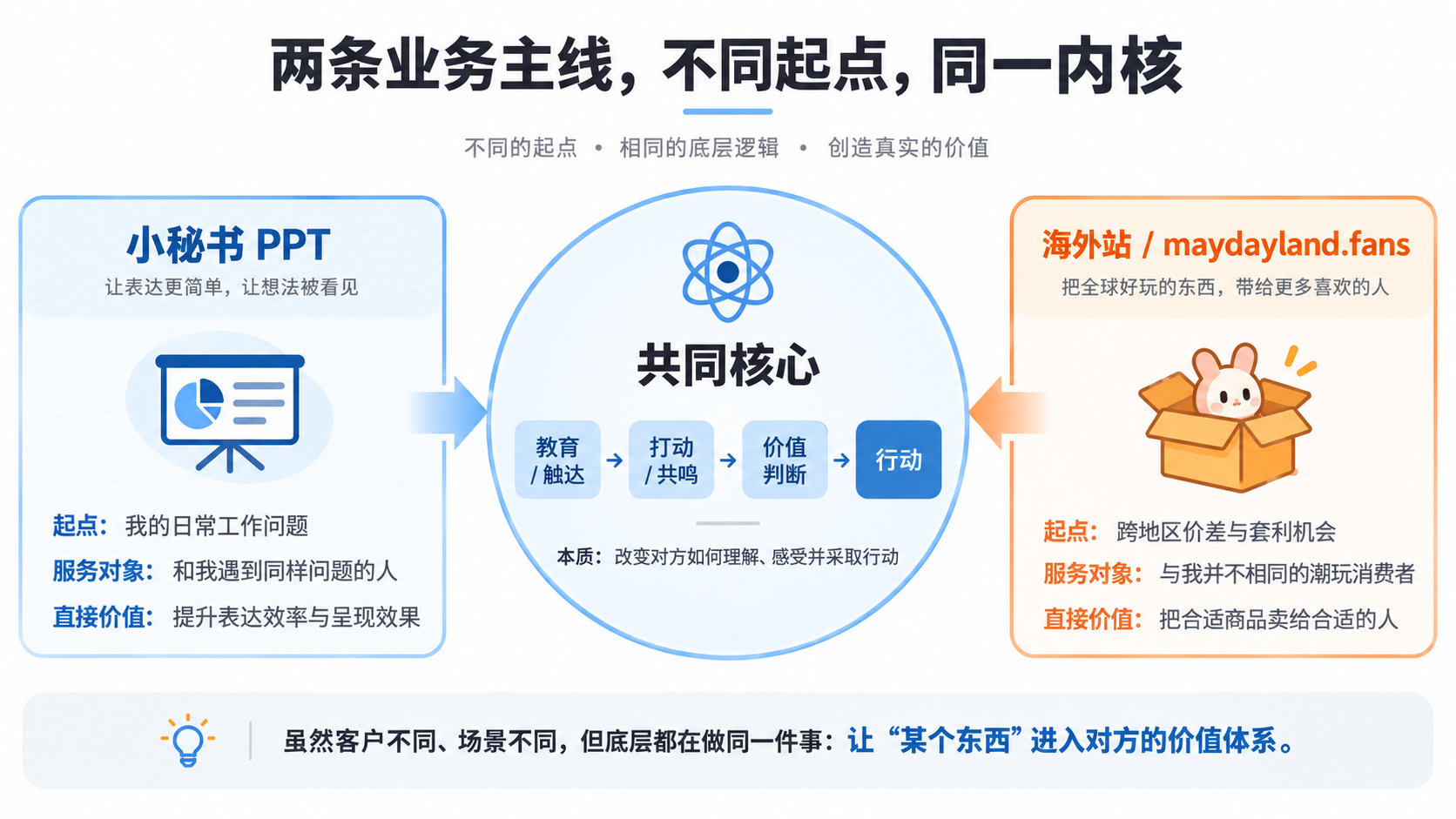
Figure 1 · Two businesses, different starting points, one shared core
2. Resonance: two inner worlds meeting through an object
I find it useful to think about this through a framework of “subject, object, and intersubjectivity.”
I have my own experiences, ideas, emotions, and aesthetic preferences. The other person has theirs. These inner worlds cannot enter each other directly. They need something perceptible through which a connection can form.
That something might be a presentation slide or a spoken explanation. It might also be a shape, a product photograph, or a collectible toy.
Subject A gives an understanding or feeling an external form. Subject B encounters that object and interprets and experiences it through their own life.
By “intersubjectivity,” I do not mean a third object placed between two people. I mean the relationship that forms around an object: some of their experiences, judgments, and feelings connect; their meanings begin to overlap.
When resonance happens, the response may be more than “I understand.” It may be:
“Yes. That is it. You have expressed something that was only vaguely present in my own mind.”
This is what I mean by the pleasure or satisfaction of the experience.
It can be the pleasure of being understood: someone gets me. It can be the pleasure of insight: so that is what is going on. Or it can be the pleasure of recognizing oneself: that expression, posture, or character captures a state I want to express.
A presentation can give an idea a form that people can understand together. A toy can give a feeling a form that can be owned, placed in a room, and displayed. Both can give something that existed only inwardly a shape in the outside world.
Here, “increasing the overlap” does not mean making everyone think alike or endlessly telling people what they want to hear. Something wholly unfamiliar may not connect. Simply repeating what someone already knows may offer no new experience.
What I would rather pursue is this: begin with shared experience, then offer something new that the other person can understand, feel, and make their own.
“You know where I am, and you have helped me see something I had not seen for myself.” That is closer to the resonance I want to create than simple agreement.
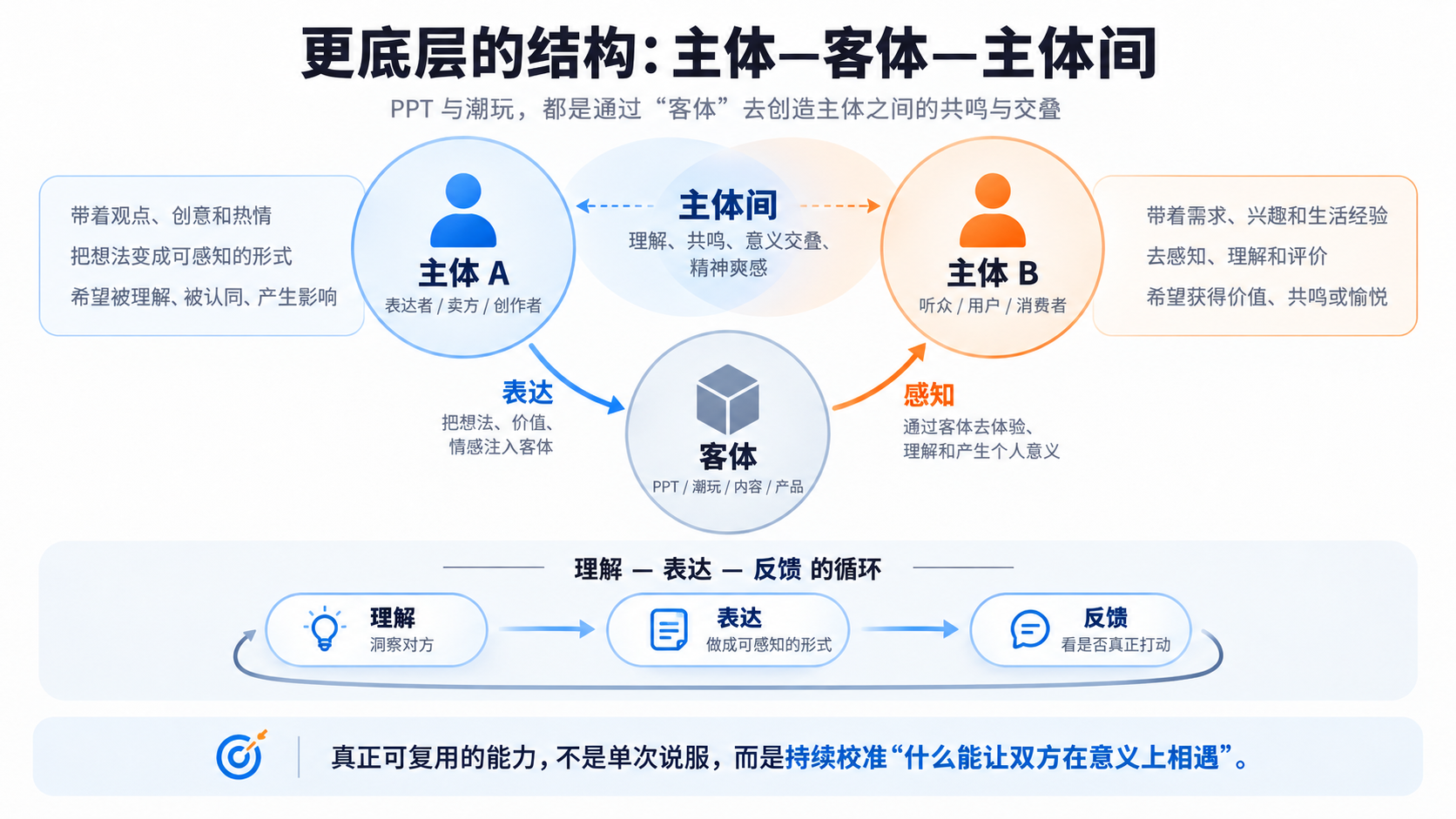
Figure 2 · Through an object, meaning meets between subjects
3. Connecting meaning, value, and action
Within this framework, I find the following distinctions useful:
| Question | What it addresses |
|---|---|
| Function | What can this thing do? |
| Meaning | Why does it matter to me? |
| Value | Compared with the alternatives, what is it worth giving up for? |
| Action | Am I willing to turn that judgment into something I actually do? |
These are not final definitions. They are a way to check which part of the process an expression has actually accomplished.
For Xiaomishu PPT, “translate while preserving the layout as much as possible” is a function. “I do not have to lay out the whole deck again” is an immediate benefit. “Even when requirements change at the last minute, I can still deliver calmly” may be the meaning the user cares about more.
For a toy, meaning need not involve a grand story. “Its appearance makes me happy, and I like having it on my desk” can be enough. Whether it also involves aesthetic expression, collecting, gift-giving, or companionship should be learned from customers, not supplied by me on their behalf.
The process I hope to encourage looks roughly like this:
Encounter → Understand → Be moved → See personal relevance → Form a value judgment → Act.
This is a map for examining problems, not a strictly linear psychological assembly line that everyone must pass through. Some people like something first and find reasons later. Others agree but lack the budget or authority to act.
So inaction cannot always be explained as “they have not been educated enough.” Sometimes the expression has failed to connect. Sometimes the product is wrong. Sometimes the conditions simply do not allow action.
Yet one shift matters in both businesses: I need to move from “How do I make others think my thing is good?” to “What counts as good in their lives?”
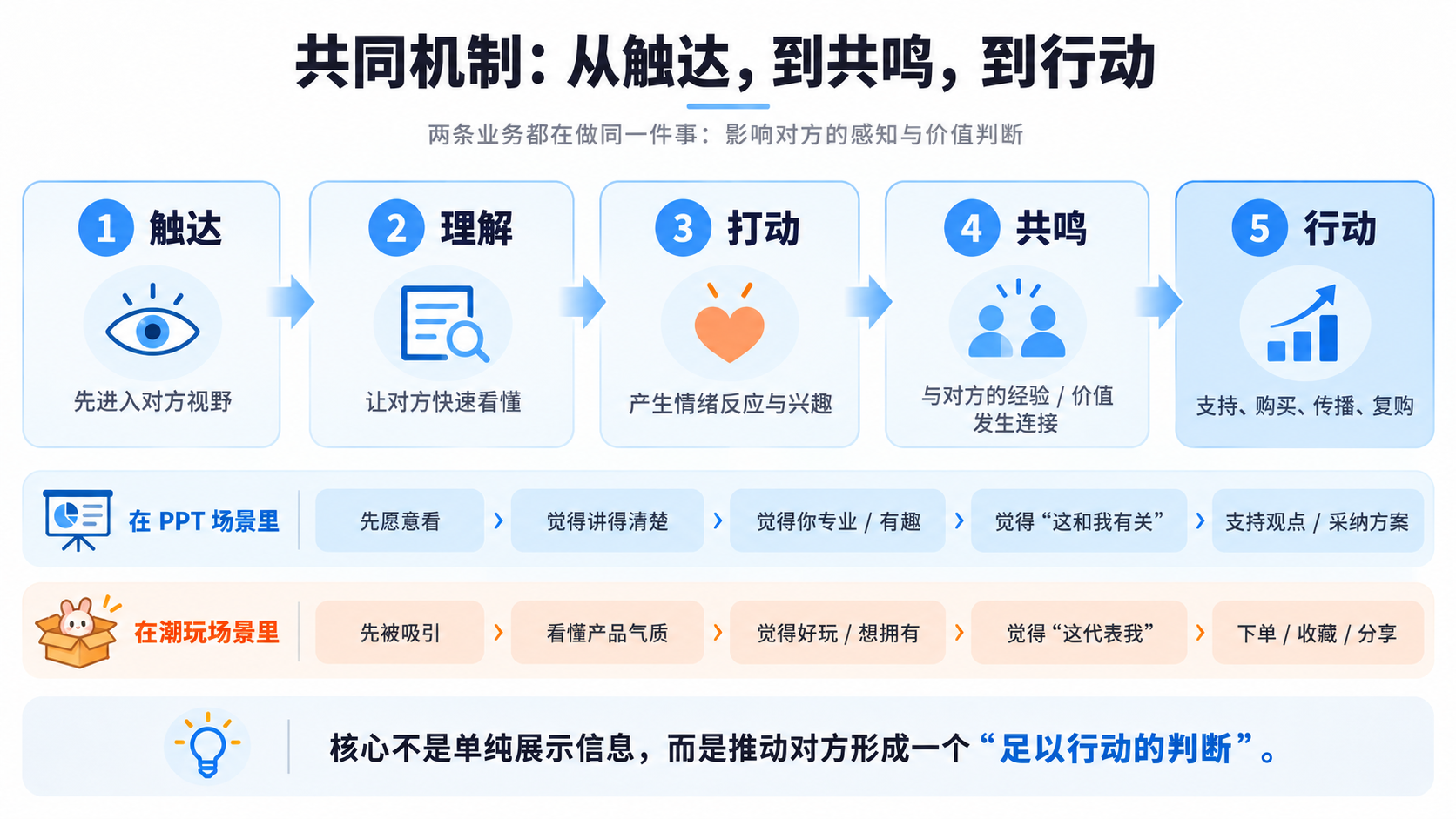
Figure 3 · From reach, understanding and resonance to action
4. The capability both businesses can share: understanding, expression, and feedback
With resonance as a working objective, what the businesses can share is not a universal sales script. It is a method for continually correcting my understanding.
Understanding means learning what situation the other person is in, what matters to them, and what they are trying to accomplish.
Xiaomishu can begin with “I have experienced this problem,” without treating me as a substitute for every user. The overseas store needs to begin more often with observation, conversation, and actual purchases. “I think overseas customers will like this” is not a fact.
Expression means turning that understanding into something another person can perceive, experience, and choose.
A tutorial, a slide, or a product scene can each be an expression. It does not merely communicate an answer. It also proposes a hypothesis: I think presenting it this way will help you understand its relevance to your own life.
Feedback means checking whether what the person actually experiences matches what I hoped to convey.
Feedback includes more than click-through rates. It includes how people describe something, where they hesitate, which content they adopt, and whether they are satisfied after using the result. They may even discover a meaning I had not anticipated.
Those observations then need to change what I do next.
Understand → Express → Observe feedback → Revise the understanding.
Collecting feedback and writing a retrospective without changing the next choice preserves a record, but it does not yet constitute learning.
This also changes how I see Xiaomishu PPT. It does not just help users finish files faster. It helps them influence their own audiences more effectively.
First, I need to give users a reason to trust and use Xiaomishu. Then Xiaomishu needs to help their professional judgment be seen clearly.
“Improve efficiency” and “help the audience appreciate what I am saying” are not contradictory aims. The former reduces the cost of producing the expression; the latter concerns the result the expression is meant to achieve.
5. OUTBIRD should remember experience, not just files
Following this reasoning makes the infrastructure direction for OUTBIRD more concrete.
In the past, it was easy for me to focus on how many models were connected, how many agents existed, how many tools they could call, and how many tasks had been automated.
Now I would rather ask: Has it helped me understand a particular person more accurately and turn that understanding into a better delivery?
Saving an image, a deck, or a product page is not especially difficult. What needs to accumulate is their relationship to people: why something was made that way, who it was for, where it was used, how it was understood, what happened, and what should change next time.
I therefore want useful pieces of practice to leave a few connected records:
The original judgment → The expression and version actually used → Real delivery and feedback → The next revision.
When preparing materials for someone I work with regularly, for example, the final deck is not enough. It is also useful to know why a particular opening was dropped, what information mattered, which changes came from that person, and which reflected only my own judgment.
With toys, the record should not merely contain a product image that “performed well.” It should preserve what the image expressed, where it was used, how people responded, and what other factors may have affected the outcome.
The easiest self-deception is to mistake machine activity for human response. A generated file is not a satisfied user. A published page is not a customer who wants to buy. An agent writing “completed” does not prove that something has changed in the world.
Nor can a system award itself a “resonance score of 92” and claim to have measured the overlap between inner worlds. What users said, what they did, and what they ultimately gained should remain distinct observations rather than being flattened into an attractive score.
This does not imply building a large new platform. On the contrary, the priority should be to reuse existing storage, business systems, and native tools, adding only the necessary connections so that the next task can actually retrieve and use previous experience.
6. But aren’t the major AI companies doing all of this too?
At this point, a sharper question emerges.
Memory, context, automation, personalization, learning from feedback: all sound useful. But which of them is not also being developed by the major AI companies?
“We do personalization while they only build general capabilities” is not a reassuring division of labor. ChatGPT Projects already organize conversations, files, instructions, and memory for ongoing work. Shopify Sidekick explicitly operates in the context of a store, helping with data analysis, content, and business tasks while presenting changes for merchant review where required.[1][2]
These examples do not establish that those products solve every problem I have. But they are enough to make one point: personalization, memory, and tool use are not unique advantages of OUTBIRD.
It would be dangerous to confuse the features a good AI system should have with a competitive moat of my own.
I therefore have to acknowledge that there is no basis for claiming a technical advantage over the major AI companies simply because OUTBIRD is “self-organizing,” “multi-agent,” or “self-improving.”
When a native tool does a job better, we should use it—even if that means deleting a duplicate implementation. Preserving a worse version merely to justify OUTBIRD’s existence would defeat the purpose.
This requires a different comparison.
Not “Can OUTBIRD’s intelligence beat the major AI companies?” but “Using equally capable AI, can I serve particular people and accomplish particular things better?”
7. Perhaps I really do have only two starting advantages
The first is that I occupy particular relationships and situations.
I have my work, people I collaborate with over time, and friends who need help. I have opportunities to participate as needs arise, requirements change, and feedback appears.
That matters more than “I have saved a few more documents.” However capable a model may be, general knowledge alone cannot tell it about a specific event that just happened and was never provided to it.
But given the same authorized information, a major company’s AI may understand it very well. The advantage is not a magical private model. It is the opportunity to keep acquiring firsthand information and organize it into timely, reliable service.
Moreover, my personal advantage is not automatically an organizational capability that OUTBIRD already possesses.
If I still have to explain the background from scratch every time, correct the same mistakes, and supervise every step, the experience remains largely in my own head.
It begins to become reusable capability only when the system reduces repeated explanations, avoids old mistakes, retrieves relevant experience, and asks the right questions when uncertain. Work and customer materials must also stay within authorized uses. Possessing data does not make it freely transferable across contexts.
The second starting advantage is that being small creates an opportunity to be more flexible.
“Opportunity” is the important word. Small does not automatically mean fast. If even a simple change requires several agents to relay messages, create duplicate tasks, and wait on one another, a person using one native tool may be faster than the entire system.
Real flexibility means lower coordination costs: stopping quickly when an approach is wrong, trying a sufficiently good solution when a need appears, and removing a self-built capability when it is no longer necessary.
Neither starting point is mysterious, and neither offers permanent protection. They count as practical advantages only when they produce better delivery, less rework, and customers who want to continue the relationship.
For Xiaomishu, the starting point is relatively clear: improve my real work first, then test which of those problems other people are also willing to pay to solve.
With maydayland, I need more humility. I have noticed an opportunity, but cannot yet treat “understanding overseas consumers,” “having stable customers,” or “possessing a distinctive brand” as established assets. Price differences are a reason to investigate, not proof of profit. Earning dollars and spending renminbi is my motivation, not the customer’s reason to buy.
The first task there is to encounter people, transact, deliver, and learn at low cost, allowing selection judgment, trust, and customer relationships to develop through actual operation.
8. Not another AI company, but an organization that uses AI
Seen this way, calling OUTBIRD an organization need not mean imagining it as a miniature model company.
It should instead be a system that uses different models to organize my goals, experience, tools, and business actions.
General intelligence, generation, coding, and standard automation should be reused wherever that makes sense. My projects, experience, and assets should remain traceable and portable. Changing a model should not mean losing the history of the work.
That freedom of choice has value for me. But customers will not automatically pay because we have a “multi-model architecture.” They benefit only when it produces a better result.
OUTBIRD therefore needs to pass at least two different tests.
As an internal system, it must show that the time saved, errors avoided, and additional delivery capability justify its maintenance, supervision, and coordination costs.
As part of an external product or service, it must answer why a customer should still choose me when they can use mature AI directly.
The comparison must be fair. OUTBIRD, equipped with all the context, should not compete against an empty chat with no information. Both sides should receive the same authorized material and an appropriate model. Then I can compare my actual time spent, rework, errors, adoption, and total cost.
When a native tool is better, replace the custom implementation. When the system merely adds another interface, simplify it. When it genuinely improves a concrete situation, keep building on that experience.
What I ultimately want is not more internal activity, but a shorter distance:
From a hypothesis about a person, to a real encounter, to an evidence-based revision.
Conclusion: turn general intelligence into concrete value
Xiaomishu PPT and the overseas toy store began in different places and address different people. Yet for me, they are converging on the same learning path: understand people, meet them through something, and let their responses correct my understanding.
A presentation gives an idea an intelligible form. A toy gives a feeling a form that can be owned. Both can seek that moment when someone recognizes an experience, an aspiration, or something they had not yet articulated.
But business cannot stop at that moment. Resonance must be followed by credible promises, real delivery, and relationships worth continuing.
OUTBIRD should help me travel that path more reliably, rather than invent a story in which we already possess a moat.
It does not need to prove that it is smarter than the major AI companies. It needs to demonstrate that, with their increasingly capable AI, I can understand particular people better and consistently make things they consider worth accepting, using, and paying for.
Their capabilities can become my productive resources. What I need to accumulate myself is an understanding of people, responsibility for outcomes, and experience from each attempt that can genuinely change the next action.
Sources and further reading
[1] OpenAI: Projects in ChatGPT. Consulted on October 14, 2026, for project context, files, instructions, and memory capabilities.
[2] Shopify: Sidekick. Consulted on October 14, 2026, for AI assistance and tasks within a store’s context.
Further reading: AI Is Becoming the World’s Secretary: A Dynamics of Information, Meaning, and Action.
This essay develops my thinking about business and systems. “Subject, object, and intersubjectivity” and the “understanding, expression, and feedback” cycle are practical analytical frameworks to be revised in response to evidence, not established universal psychological laws. The discussion of customer motivations and business advantages should not be read as completed market validation.
Found this helpful? Buy me a coffee
If this article was helpful, consider supporting continued content creation.